Back to Home
All Attractions

Royal Palace of Madrid
The Royal Palace of Madrid isn’t just big—it’s gigantic. Covering over 135,000 square meters and boasting more than 3,400 rooms, it’s the largest royal palace in Western Europe (yes, even bigger than Buckingham). Built in the mid-18th century by King Philip V on the site of a former Moorish fortress, it’s a glittering example of Baroque and Classical architecture. While the Spanish royal family doesn’t actually live here today (imagine trying to heat that place in winter), the palace is still used for official ceremonies and grand state events. Inside, you’ll find opulent rooms draped in velvet and gold, a royal armory that could inspire any medieval knight, and even a collection of priceless Stradivarius violins. Fun fact: the grand staircase alone is carved from a single block of Spanish marble—making it as much an artwork as a walkway.
Discover more

Prado Museum
The Prado Museum, officially known as Museo Nacional del Prado, is the main Spanish national art museum, located in central Madrid. It is widely considered to have one of the world's finest collections of European art, dating from the 12th century to the early 20th century, based on the former Spanish Royal Collection, and the single best collection of Spanish art.
Discover more

Retiro Park
The Retiro Park is one of the largest parks of the city of Madrid, Spain. The park belonged to the Spanish Monarchy until the late 19th century, when it became a public park. A magnificent park, filled with beautiful sculptures and monuments, galleries, a peaceful lake, and a host to a variety of events, it is a green oasis in the heart of the city.
Discover more

Plaza Mayor
The Plaza Mayor was built during Philip III's reign and is a central plaza in the city of Madrid, Spain. It is located only a few Spanish blocks away from another famous plaza, the Puerta del Sol. The Plaza Mayor is rectangular in shape, measuring 129 by 94 metres, and is surrounded by three-story residential buildings having 237 balconies facing the Plaza.
Discover more

Gran Vía
The Gran Vía is a street in central Madrid, Spain. It leads from Calle de Alcalá, close to Plaza de Cibeles, to Plaza de España. The street, sometimes referred to as the "Spanish Broadway", is one of the city's most important shopping areas, with a large number of hotels and large movie theatres.
Discover more

Temple of Debod
The Templo de Debod is a 2,000-year-old Egyptian temple gifted to Spain in 1968 after the Aswan High Dam threatened to submerge many ancient monuments. It was dismantled and shipped stone-by-stone, then reassembled near Plaza de España. It’s one of the few examples of Egyptian architecture outside Egypt.
Discover more

Plaza de Olavide
Begin your day at Plaza de Olavide, a leafy octagonal square tucked away in Chamberí. Unlike the more famous Plaza Mayor, here you’ll mostly rub elbows with madrileños pushing prams, reading newspapers and sipping café con leche. The square’s layout was inspired by 19th-century urban renewal, but today it functions like a communal living room. Benches encircle a central fountain, children play in the playground and the surrounding cafés offer a cosy view of everyday Madrid.
Discover more

Museo de Artes y Tradiciones Populares
Housed in a 19th-century corrala – a communal apartment building with a courtyard used historically for improvisational theatre – the Museo de Artes y Tradiciones Populares contains over 7,000 artefacts representing Spain’s rural and urban crafts. Its permanent collection ranges from textiles and wedding gowns to tools of jewellers, blacksmiths and cobblers. If you’ve ever wondered what a medieval tanner’s workshop smelled like, this museum will get you close without the odour!
Discover more

Mercado de la Cebada
Madrid’s Mercado de la Cebada dates back over 140 years and was renovated in 2013. The market still hosts old-school fishmongers and butchers, but it now blends in eco shops, fashion stalls and wine bars. It’s where modern Madrid meets its traditional roots.
Discover more

Barrio de las Letras
The Barrio de las Letras, or Literary Quarter, is a pedestrianised neighbourhood where Spain’s Golden Age writers lived. The houses of Lope de Vega, Quevedo, Góngora and Cervantes line the narrow cobbled streets. Text from their works is inscribed on plaques embedded in the pavement, turning a stroll into a poetry trail.
Discover more

Lavapiés Neighborhood
Around Tabacalera is Lavapiés, a neighbourhood where 88 different nationalities coexist. Originally a Jewish barrio, it later welcomed immigrants from Africa, Asia and Latin America. The area’s distinctive corralas (balconied apartments) and eclectic markets reflect this multicultural tapestry.
Discover more

Parque de las Siete Tetas
The park’s nickname, Parque de las Siete Tetas, comes from its seven hills that resemble the shape of breasts. Officially it’s called Cerro del Tío Pío, but locals prefer the cheekier moniker. The name alone is enough to make you giggle, and the hills provide one of the best panoramic views of Madrid.
Discover more
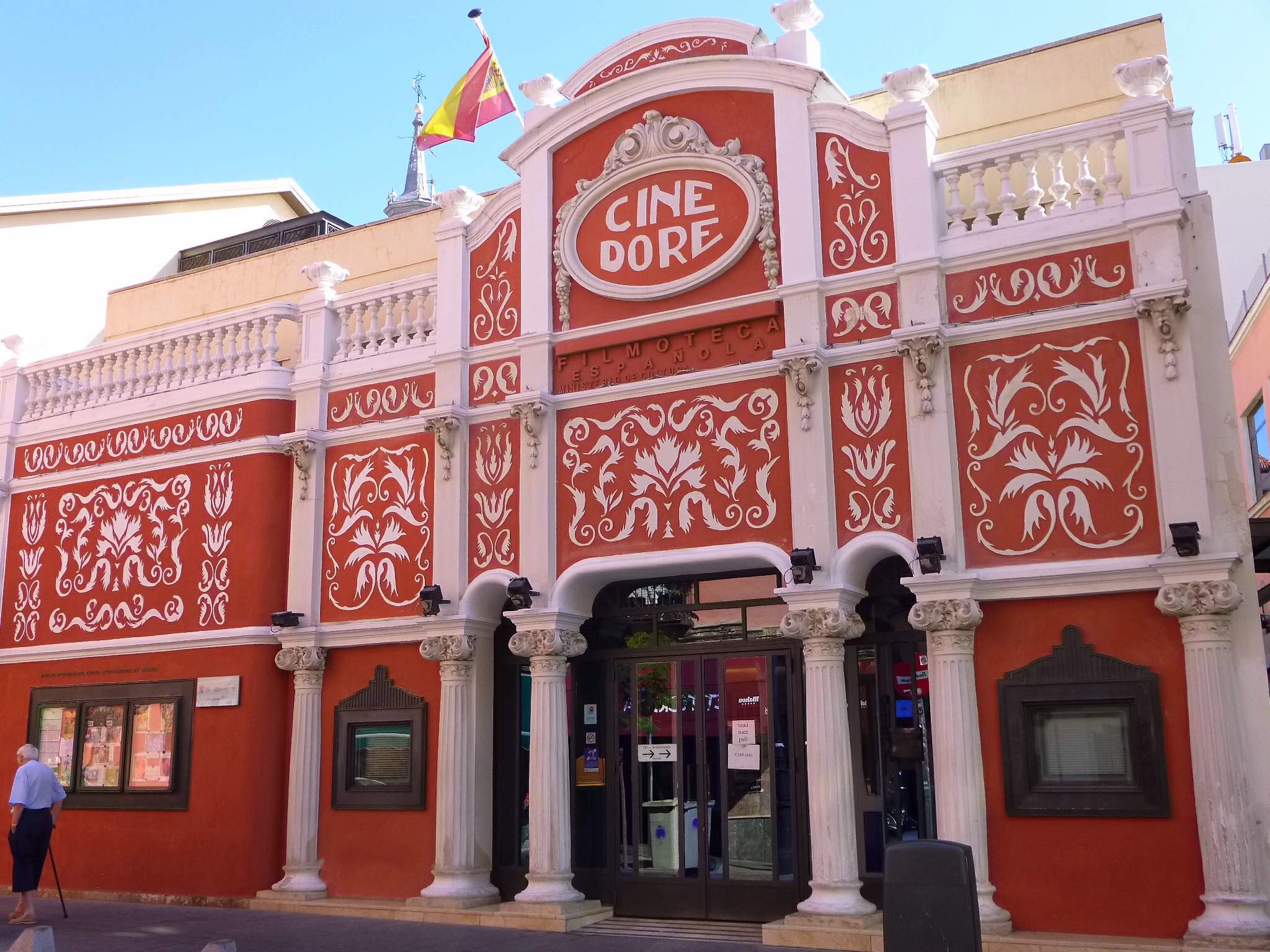
Cine Doré (Filmoteca Española)
Cine Doré is a 1920s art-deco cinema run by the Filmoteca Española. Its ornate turquoise and dark-blue ceiling with gold details makes you feel like you’ve stepped back into the golden age of cinema. The cinema retains the atmosphere of the past while screening films from around the world.
Discover more

Museo Sorolla
The Museo Sorolla is located in the house built by impressionist painter Joaquín Sorolla in 1911. He lived here with his family until his death, and the building was later donated to the Spanish state and opened as a museum in 1932. Visiting feels like stepping into a Belle Époque family residence.
Discover more

Parque El Capricho
El Capricho (“The Whim”) is a garden on Madrid’s outskirts built between 1787 and 1838 for María Josefa Pimentel, the Duchess of Osuna. Its manicured grounds feature French baroque flower beds, English-style meadows and Italian-inspired grottos. It’s a tranquil, romantic escape from the city bustle.
Discover more

Cecilio Rodríguez Gardens
Within El Retiro’s 118 hectares is a walled garden named after Madrid’s chief gardener, Cecilio Rodríguez. The garden features fountains, pergolas, ponds and statues. Unlike the busy lake area, this secluded space feels like a secret.
Discover more